Everyday Danish A2 · Upper beginner
Make morning plans in Danish with skal and kan
Talk about a morning plan in Danish and hear the difference between skal and kan in a simple conversation.
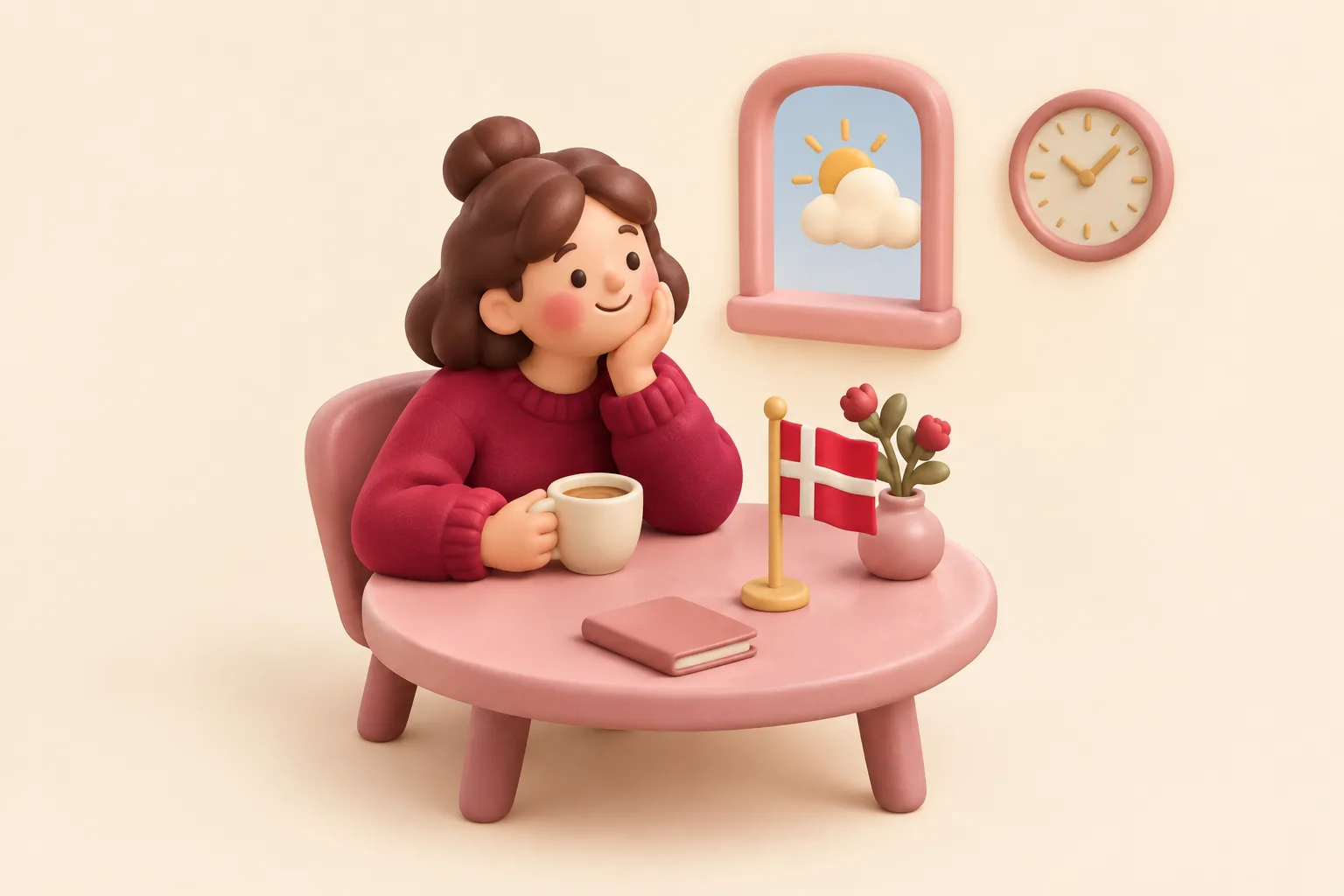
Coffee is on the counter, the morning is moving quickly, and someone needs to decide what happens next. This is the moment when a few Danish words can turn small talk into a plan.
Start the morning warmly
A morning greeting does more than fill a silence. It gives the other person an easy place to answer before you move on to plans. You can also offer coffee with Skal jeg (can I), then continue with the rest of the question.
Godmorgen! Har du sovet godt?
Hvad skal vi gøre i dag? Er du fri?
Skal jeg give dig en kop kaffe først?
Use skal for the plan
When the day is still open, skal can point to an arrangement or an expected action. In Hvad skal vi gøre i dag? (What shall we do today?), it helps two people decide what comes next. The question is not about a rule. It is about making a shared plan.
The next short question, Er du fri? (Are you free?), checks whether that plan is possible. Say it after asking about the day, and your conversation has a clear direction. A simple Ja tak. (Yes thanks) can keep the tone warm when someone offers something.
Listen for what comes before and after skal. When people are discussing the day together, hear it as a question about their arrangement or next action.
Leave room for the weather
Plans often depend on something outside your control. kan can express ability or possibility, so it leaves the plan open rather than fixed. In Vi kan gå en tur i parken, hvis vejret bliver godt. (We can go for a walk in the park if the weather gets nice), the walk depends on the weather.
Notice hvis vejret bliver godt (if the weather gets nice). It gives the reason for waiting before deciding. Later, Det bliver solskin. (It’s going to be sunny) makes the idea feel more certain.
Vi kan gå en tur i parken, hvis vejret bliver godt.
Here, kan leaves space for a possibility rather than making a firm arrangement.
Keep each reply connected
A good short exchange moves one step at a time: greet, ask about the day, suggest an idea, then respond to it. You do not need many words. A reply that develops the previous thought makes even a simple morning conversation feel clear.
Skal can express an arrangement or expected action here.Today, say Godmorgen! Har du sovet godt? to yourself once, then add one question about the day. Practise hearing skal as the word that moves the conversation towards a plan.