Everyday Danish A2 · Upper beginner
Make a simple cooking plan in Danish
Invite someone to cook, make a polite request and keep a Danish kitchen plan moving.
When dinner needs a plan
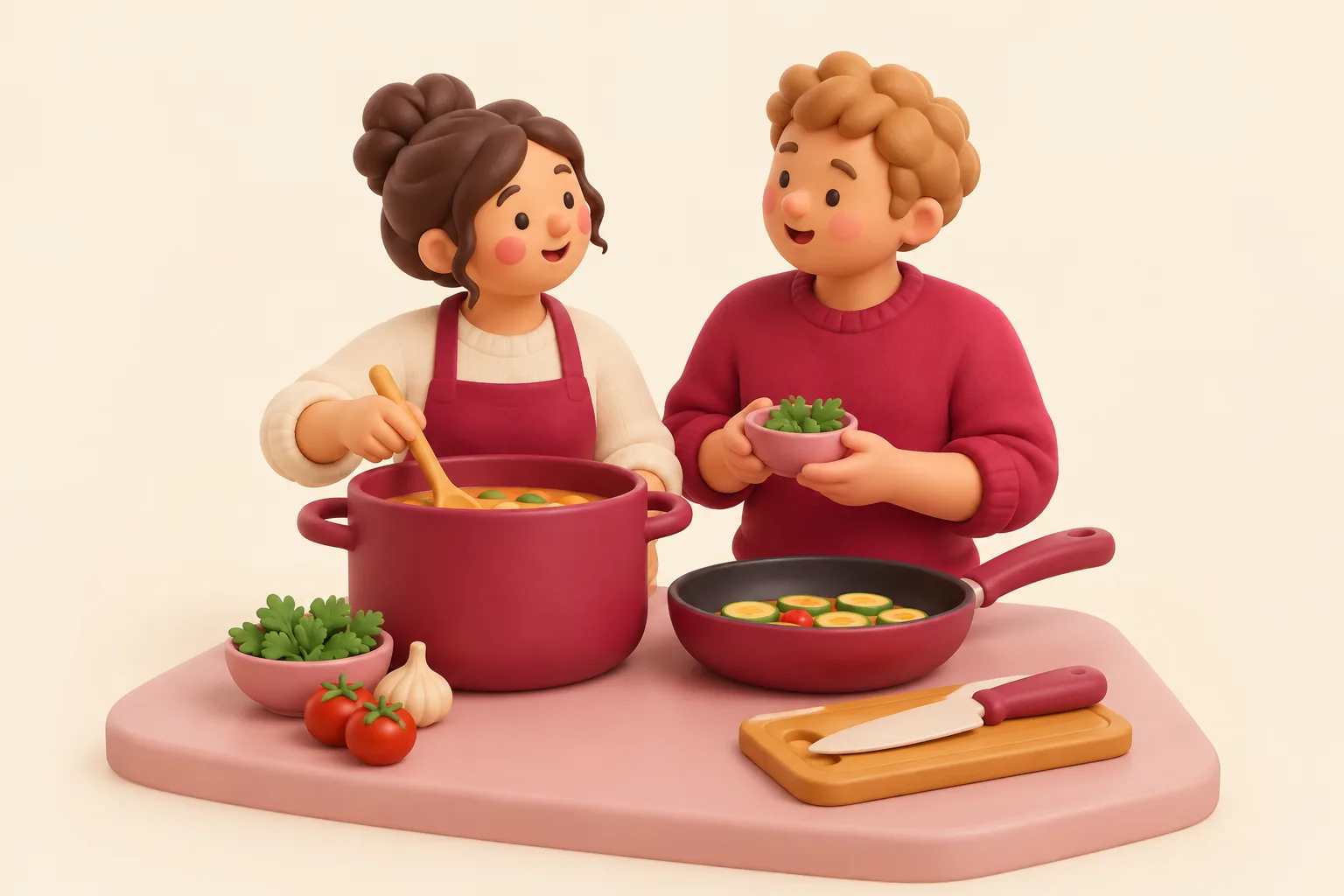
It is late in the day, two people are in the kitchen, and neither has started cooking yet. One person has an idea for dinner; the other needs to find the right pan. A few short Danish lines can turn that pause into a shared plan.
Start with Skal vi lave mad sammen i aften? (Shall we cook together tonight?). In this sentence, skal can signal an arrangement or an expected action. The whole sentence matters: here it opens a plan for the evening rather than giving an order.
You do not need a long introduction before saying it. The word sammen (together) makes the invitation clearly shared, and i aften (tonight) gives the plan a time. Say the complete sentence when you want to suggest cooking with someone.
den store gryde
en stegepande
kniven
skuffen
Ask without sounding abrupt
Once you have agreed to cook, you may need help finding something. Kan du tage den store gryde frem? means “Can you get out the big pot?” Here, kan can express ability or possibility, and it also helps form a request.
This is a good pattern to recognise because the request does not need a long explanation. The person asking names one clear next action. The reply can then add another action instead of stopping at yes.
Say one short request, then pause. Give the other person room to answer before you add the next kitchen task.
Keep the plan moving
A simple yes becomes more helpful when it carries the meal forward. Ja, jeg har fundet en god opskrift på pasta. means “Yes, I've found a good recipe for pasta.” It gives the other person a reason to continue and a direction for what to make.
You can also answer a request by taking on an extra task. Ja, og jeg finder også en stegepande til kødet. means “Yes, and I'll also find a frying pan for the meat.” The word også (also) shows that the speaker is doing more than the first requested action.
Later, a practical question can be just as short. Hvor er kniven? means “Where is the knife?” A clear answer tells the other person exactly where to look, so the cooking does not stall.
Skal vi lave mad sammen i aften? suggests a shared plan for the evening.Today, picture one ordinary evening in your kitchen. Say Skal vi lave mad sammen i aften? aloud once, then follow it with one clear request when you are ready to practise with another person.