Danish plurals that change or double
Learn to spot Danish plurals with vowel changes, double consonants, and words that are usually plural.
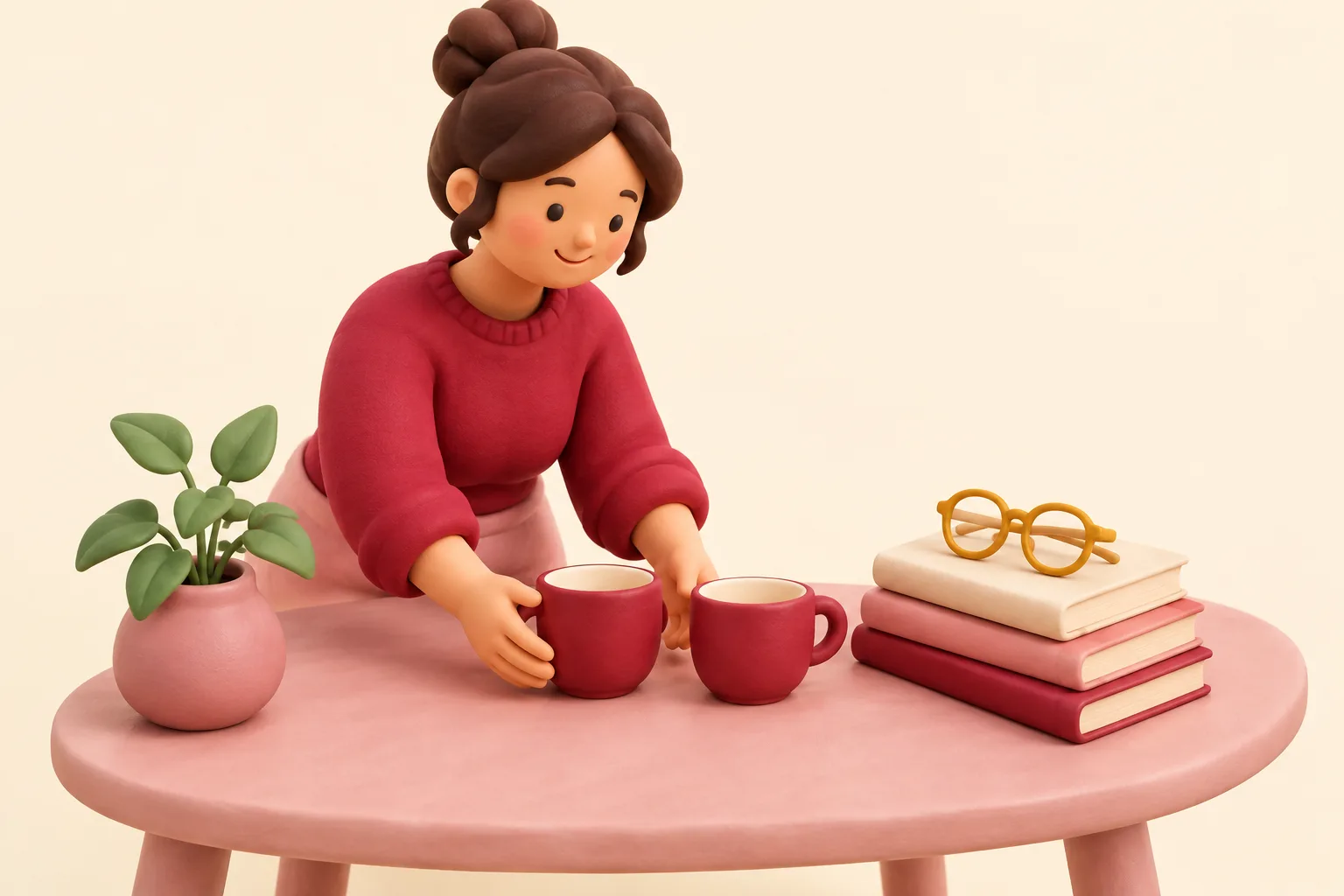
A kitchen table is set for more than one person, and suddenly one cup is not enough. In Danish, that small change can alter the middle of a word or add an extra letter. It helps to notice these forms when you meet them, rather than trying to force every noun into one pattern.
Learn some nouns as pairs
A few Danish nouns change their vowel in the plural. Keep en bog (a book) and bøger (books) together in your notes, as if they were one item. The same is true of en tand (a tooth) and tænder (teeth).
You will also see en hånd (a hand) become hænder (hands), and et barn (a child) become børn (children). There is no rule here that tells you which nouns will change. A fixed pair is easier to remember than a rule with exceptions.
Notice the doubled letter
Some plural spellings double the final consonant before the ending. en kop (a cup) becomes kopper (cups), while en ven (a friend) becomes venner (friends). The doubled consonant reflects the short, stressed vowel in these words.
When you are writing, slow down for this detail. One missing letter changes kopper into koper, which is not the form you need. en hat (a hat) follows the same pattern with hatte (hats).
Do not write koper when you mean kopper. Keep the two p's when you write the plural of en kop.
Words you usually meet in plural
Some everyday Danish words are commonly used in plural form for their usual meaning. penge means money, briller means glasses (spectacles), and forældre means parents. Treat these as the forms to reach for in ordinary situations.
Penge is already plural, even though English “money” is singular. The definite form pengene means the money. Danish er works with both singular and plural subjects, so you do not need to change it to match the number of the noun.
penge
briller
forældre
Pengene er på bordet.
Keep the form you need
Do not try to make penge singular with an indefinite article. For the everyday meaning, use the plural form you have learned. If you need to talk about one parent, Danish has en forælder (one parent), but parents are forældre.
When you meet an unusual plural, write its singular and plural side by side. Seeing en hånd beside hænder makes the change easier to recall.
kopper is the plural form, with a doubled p.Today, choose one pair such as en bog and bøger, then say it aloud twice. A tiny pair remembered together can save you from guessing when you need more than one thing.